
The Middlesex County Two-Record Owner Check
Land records in Connecticut live at the town level. To trace a Middlesex County parcel, begin with the municipal assessor, then carry the owner name you find into that town clerk's deed index.
- Confirm the municipality from the situs, not only the postal city.
- Search the town assessor and open the matching parcel card.
- Copy Owner, co-owner, mailing address, parcel key, and deed reference.
- Search the same name as grantee in that town clerk's index.
- Read the newest deed's grantee, date, book/page, and legal description.
Start With Situs, Not Mailing Address
Postal names mislead here. Rockfall 06481 sits inside Middletown records, Ivoryton 06442 belongs to Essex, and Higganum 06441 belongs to Haddam. None of these places defines clerk jurisdiction. Confirm the physical address in the town's GIS map or with the assessor, since an owner's mailing address can sit in another town entirely without moving the parcel.
Read Owner and Parcel Fields Together
An assessment card packs plenty of fields: Location, Mblu or Map-Lot, Acct#, PID, owner, co-owner, mailing address, values, sale date, price, and book/page. Read them together. Middletown's Assessor page cautions that ownership in the city GIS runs behind, so query VGSI and then pull the newest clerk deed. A mailing address is only a contact clue. It never proves who occupies the parcel.
Match the Owner to the Town Deed Index
Middletown's deed index runs on RecordHub back to January 1, 1969. Clinton offers online depth through Book 106 and 1976. Cromwell's current portal is GovOS. Its legacy index reaches back to July 16, 1851. Search punctuation variants, initials, and full trust or LLC names, and when a portal stalls, fall back on that town clerk's counter, phone, or a written request.
Entity and Estate Names Need a Second Check
The assessor may name an LLC, a trust, or an estate instead of a person. Copy the name exactly. Connecticut business records can clarify an entity's legal name and status. Probate can explain executor authority and estate transfers. Neither source replaces the recorded deed. Neither surfaces every beneficial owner.
Where Middlesex County Ownership Appears
Each source answers a distinct question and carries its own date.
| Source | Owner Info It Gives | Access |
|---|---|---|
| Assessor roll | Owner, mailing address, parcel, values | Municipal portal or counter |
| Town clerk deed index | Latest recorded grantee and instrument | Portal or clerk |
| Secretary of State | Entity legal name and public filing data | State business search |
| GIS parcel viewer | Spatial link to a tax parcel | Town or state viewer |
Ownership and occupancy are different facts. A tax bill's mailing address, the deed's owner of record, and the people actually living at a parcel can all differ, and no single screen reliably identifies every person at an address.
When the Tax Roll and Deed Disagree
The October 1 Grand List is an assessment snapshot, not a live closing feed. No countywide update-lag figure exists. Compare the dates instead. A newly recorded deed often points to the current owner while the assessor card still shows the prior name, so ask the assessor whether its card has refreshed.
Recent sale. Use the newest recorded deed as the confirmation point when its date postdates the published roll.
Cromwell's Fraud Alert Option
Cromwell's legacy service offers free Property Fraud Alert enrollment. A notice arrives when your chosen name appears in newly recorded material. An alert is only a prompt to inspect a filing. It neither prevents fraud nor proves a document invalid. So bring anything suspicious straight to the town clerk.
Use Book and Page as the Handoff Key
A sale block on the assessor card may carry a date, price, certificate, and deed book/page. Those fields are not the deed itself. Use them as a handoff key to the clerk index. Compare the grantee and the legal description rather than the street address alone. Older deeds may describe a subdivision lot or metes and bounds predating the situs number.
An image may sit behind a subscription. It may predate portal coverage. In either case, ask the clerk for inspection or a copy. Certification alone still is not a title opinion.
Expand a Search Through Probate
A death can interrupt the tidy buyer-seller pattern. Search for estate, executor, administrator, trustee, and survivorship wording in the deed index. The right Connecticut Probate Court district may hold an inventory, a decree, or the authority behind a later executor deed. State Library finding aids point to older estate files.
Probate explains authority or a lingering name. The newest recorded conveyance remains the confirmation point.
Follow Jurisdiction Across Older Records
Town formation can split one parcel's history across two municipal indexes. No county recorder bridges that transition. When in doubt, check both towns. Follow the deed references. Follow the historic jurisdiction to find where the next instrument was recorded. For a present-day border question, trust GIS and assessor data over the postal city.
Confirm the Owner Without Mistaking a Bill for Title
A tax collector record can reconcile the billed account, the list year, and the notice recipient. It still does not replace the current deed. A GIS label may be copied from an assessment export. That copy can be older than the clerk index. Dates reveal each source's currency. When records disagree, note the conflict, ask the assessor when its roll refreshed, and ask the clerk whether a later conveyance was indexed.
Search related instruments only as needed. A mortgage names borrowers and lenders. A release closes a recorded encumbrance, and a lis pendens signals litigation, but none of them names a new owner. A formal title conclusion calls for the full recorded chain and qualified professional review, not one public name field.
Inspect an Owner-Search Starting Point
The Middletown Assessor page places property links beside its ownership-currency warning.
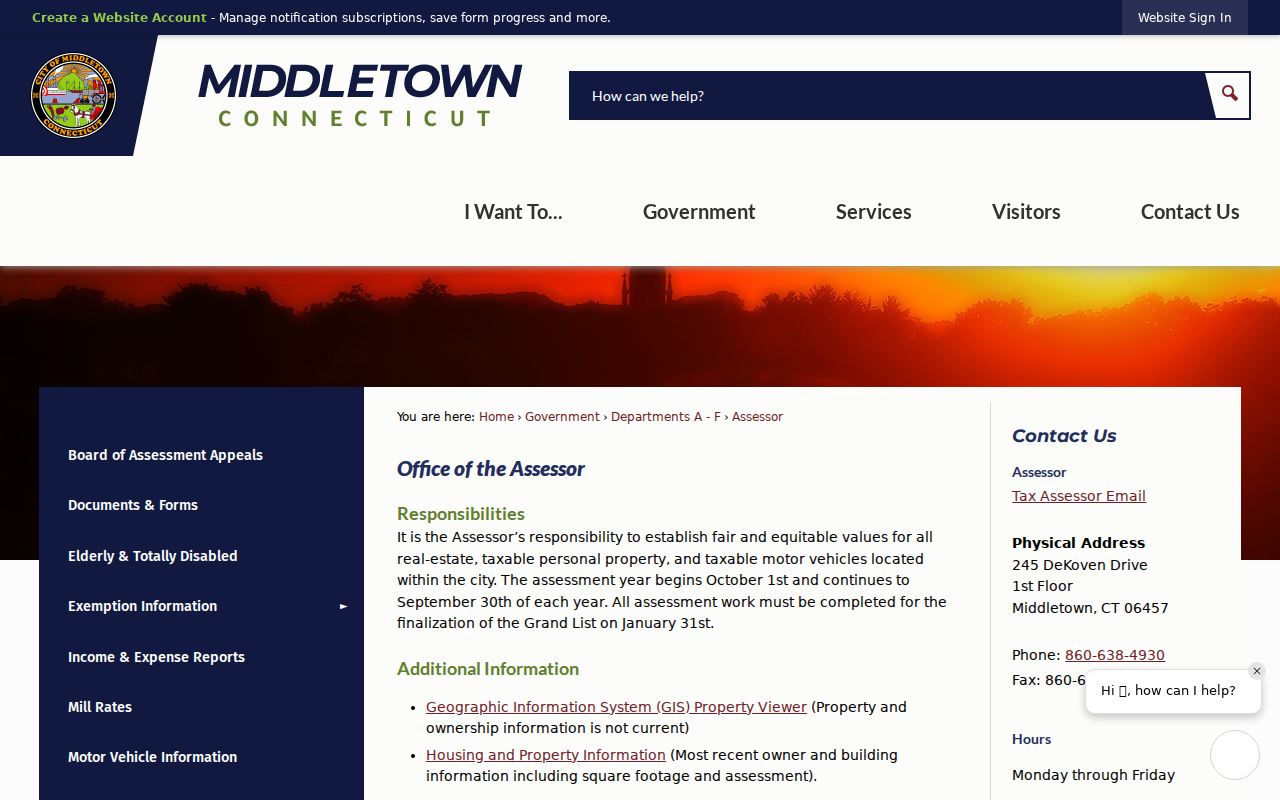
This warning pushes the search to the newest deed.
What an Owner Lookup Cannot Establish
A public record has real limits. It can name the owner of record on the tax roll and the grantee in a recorded deed, but it cannot certify marketable title or prove who actually lives at the property. Unrecorded claims and hidden beneficial interests stay invisible. Liens, probate orders, litigation, deed exceptions, and easements can complicate the picture further. Connecticut law also keeps protected addresses and suppressed CAMA fields confidential.
Full due diligence may reach beyond the deed records. Mortgages, assignments, releases, tax liens, judgment liens, lis pendens, maps, and court or probate files can explain a burden or establish authority without changing how you find the owner. Search the same parcel number and the same names. Reconcile the legal description each time. Note whether each obligation was ever released.
Commercial compilations carry their own risks. They can go stale or merge similar names into one entry. An official assessor or deed index is the better source, because its custodian, date, and context are identifiable. Even official web data holds errors, though. When a purchase, estate, easement, or dispute depends on the answer, obtain the instrument itself.
Public-access rules never erase confidentiality or address protections. Ask only for the public portions. Accept lawful redactions without complaint. If results conflict, contact the custodian rather than reconstructing protected personal information from unrelated sources.
Lawful use. Use Middlesex County owner information for legitimate property research. Never use public records to stalk, harass, intimidate, or harm anyone.