
The Middlesex County Owner-of-Record Card
The assessment card is the present-tense starting point. Exact labels vary by municipality.
| Owner or Co-Owner | Name carried on the published roll |
|---|---|
| Mailing Address | Destination for assessment and tax notices |
| Situs Address | Physical parcel location |
| PID, Acct#, or Map-Lot | Municipal parcel key |
| Deed Reference | Book/page where supplied |
| Last Sale | Date and price fields where published |
The tax roll does not establish occupancy. A parcel's mailing address can point to an out-of-town owner, a lender, a trustee, or an entity rather than a resident.
Middletown Flags Stale GIS Ownership
Middletown warns that its GIS ownership layer is not current. The Middletown Assessor posts that notice, and the city's VGSI portal returns the assessor card with parcel and owner details. Treat a map label as a hint only.
October 1 Is a Dated Snapshot
Municipalities compile an October 1 Grand List each year. That date explains the tax context but is not a promise of immediate updates after each closing. No official Middlesex County average lag figure exists. Attach the roll year and access date to the owner name.
Parcel Keys Prevent Same-Name Errors
Parcel keys differ by town. Middletown uses Map, Lot, Map-Lot, Acct#, and PID, Clinton adds Map Cut, Block, Unit, and Mblu, and Cromwell relies on local identifiers, so copy every character because a shared name alone invites errors. Match situs, legal description, and deed reference instead.
Trust, Estate, and LLC Names
The current owner may appear as a trust, an estate, or an LLC. Search exact spellings and variants in the deed index. Connecticut business filings can confirm an LLC's legal name, and probate records may clarify an executor's authority. Neither source exposes every beneficial interest.
Confirm the Current Middlesex County Owner
The card dates it; the deed index orders it.
- Record owner, co-owner, parcel key, sale date, and deed reference.
- Search that owner as grantee in the correct town index.
- Compare recording date, parties, legal description, and prior reference.
- Check for a newer conveyance under name or entity variants.
- Ask the clerk for a copy if the image is unavailable online.
- Owner of record
- The name on a dated official roll.
- Assessment roll
- The municipal Grand List used for taxation.
- Recording lag
- The interval before another system reflects a filed deed.
Use the Correct Town Portal
Town deed portals differ in depth. Middletown's RecordHub starts January 1, 1969, Clinton reports coverage through Book 106 and 1976, and Cromwell's GovOS runs beside a legacy service reaching July 16, 1851, with guest access limited to indexes and images behind payment. Counter, phone, and written requests still work.
Tax Billing Is a Separate Current Record
A tax collector answers billing questions. Bills and balances never replace the deed index as proof of ownership. When names disagree, compare Grand List year, recording date, and billing cycle, and remember that a recorded lien or release belongs in the land records.
Freshness check. A newly recorded deed can be more current than an assessor card; compare dates rather than assuming a fixed lag.
Separate Sale Date From Recording Date
An assessment card may list a sale date. The clerk index supplies the recording date and time. Those two dates can differ. The sale field is only a pointer, because the deed index shows whether a later conveyance actually reached the public records. Compare parties, book and page, and the legal description before trusting either date alone. Clinton's own process, stamping the receipt date, checking the conveyance-tax form, logging a daybook entry, and indexing grantor and grantee, gives that chronology far more precision than any undated map label.
Owner Mail Can Go Elsewhere
Situs pins down the land. Mailing tells you where notices go, and it may point to another town or state, a trustee, an estate representative, or an entity. The recipient may not live there. A different mailing city never changes what the assessor and clerk have on file. Use the address only for legitimate property communication. Do not infer anyone's residence or personal routine from the card.
Check Co-Owner and Fiduciary Wording Exactly
Cards divide Owner, Co-Owner, and Owner of Record. Copy every name exactly. Include any trustee, executor, administrator, or entity wording, since the deed shows how grantees actually hold their interest. Search the index under each relevant spelling. Initials, punctuation, and trust or LLC suffixes can trip a dynamic search, especially where the portal never documents partial-name behavior.
Two names on a card prove nothing about shares. The real vesting language sits in the newest deed, so read it there. Never guess survivorship terms from a bare listing. If a death or estate proceeding changed who holds authority, identify the proper Connecticut Probate Court district. Then return to the recorded executor, administrator, or fiduciary deed for the present land-record result.
Use a Municipal Counter Fallback
Portals have limits. Some omit a parcel, hide images behind payment, or shift during a migration. Ask the assessor when a card was last refreshed. Ask the clerk for the newest indexed deed. A request that gives town, situs, parcel key, owner spelling, record type, and date range works best, and Connecticut FOIA, CGS §§1-200 through 1-242, generally supports inspection and copying subject to exemptions and special fees. That route beats waiting on a county recorder that does not exist.
View the Assessor Currency Warning
The Middletown Assessor page warns that GIS ownership lags.
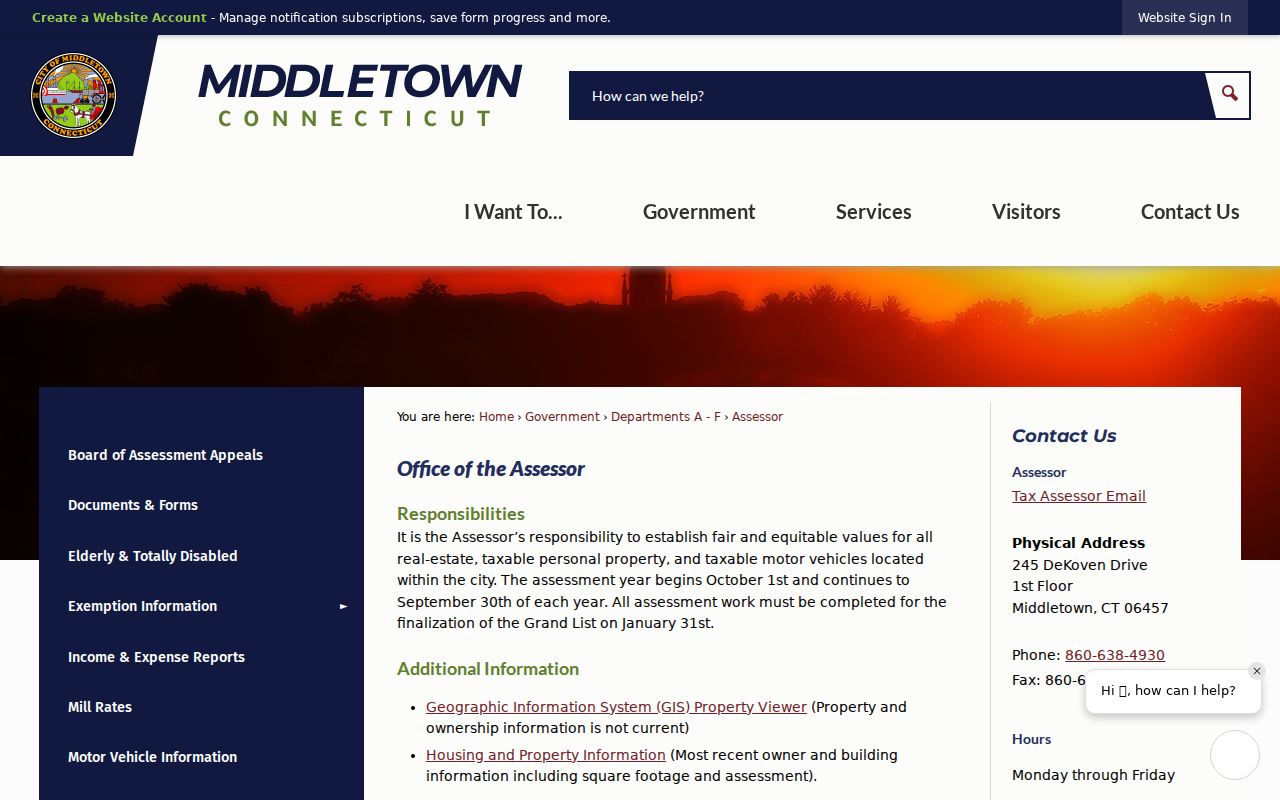
The warning reinforces the rule. Read the card as dated evidence, and verify any recent transfer against the newest recorded deed.
Use Current Owner Data Lawfully
A published mailing address can help with a legitimate property inquiry. Some addresses are suppressed or protected. Connecticut Safe at Home and CGS §1-217 restrict disclosure for qualifying people. CAMA guidance includes a suppression field for that reason. Never try to work around these protections.
The owner-of-record field serves real purposes. Purchase research, an estate question, deed-fraud monitoring, and legitimate owner contact all count. It is not an occupant directory. A trust, an LLC, a life estate, a survivorship interest, or a pending probate matter can make the public name less simple. It may not match what it first appears to be. Mortgages, releases, liens, and lis pendens matter when relevant. None of them automatically changes the current grantee. A court docket can flag litigation. The Judicial Branch cautions that its web display is not the official file, and older cases may need verification with the clerk.
For a recent sale, note the assessor access date. Also note the Grand List year, the last-sale field, the deed recording date, and any clerk response. That record-keeping habit separates a genuine update lag from a mistaken parcel match. When a card omits book/page, search the roll owner as grantee and narrow by town and date. Common names call for prior-owner and legal-description clues. Never substitute a mailing address for the parcel description when deciding whether a deed matches.
Lawful use. Use Middlesex County owner records for legitimate property matters. Never stalk, harass, intimidate, or harm a person.